
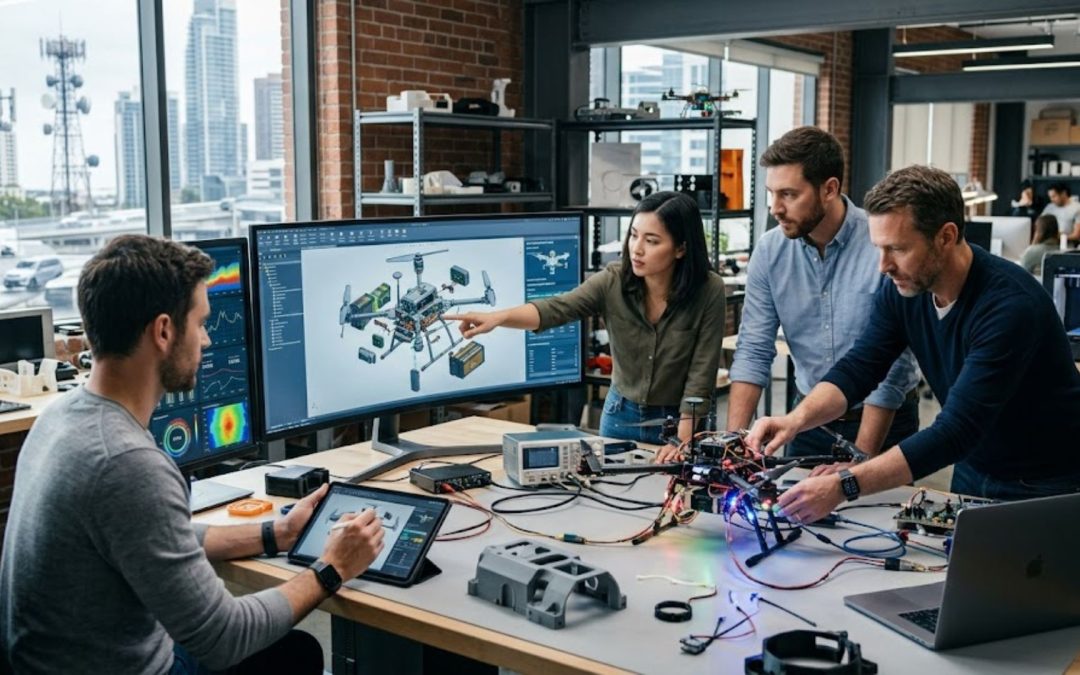
The world of product design has evolved significantly in recent years. As technology continues to advance, designers now have more tools and resources than ever before to create innovative, efficient, and interconnected products. One of the key factors driving this transformation is the integration of Computer-Aided Design (CAD) and the Internet of Things (IoT). These two technologies, when combined, are revolutionizing the way we design and manufacture products, making them smarter and more connected.
In this blog, we will explore how CAD and IoT are working together to design smart, connected products. We will look at the benefits of this integration, the challenges it brings, and the future of product design in a connected world.
What is CAD?
Computer-Aided Design (CAD) is a technology used by engineers, architects, and designers to create 2D and 3D models of products or structures. CAD software allows users to design, visualize, and test products before they are built. It is widely used in industries like automotive, aerospace, and manufacturing.
CAD provides designers with the ability to simulate real-world conditions and make adjustments to their designs in a digital environment. This reduces the need for physical prototypes and speeds up the design process. The tools offered by CAD software are extremely powerful and offer a wide range of capabilities, such as:
- 3D modeling: Create detailed 3D models of products, allowing for accurate representations of the final product. Simulation Test designs for real-world conditions, such as stress, heat, and motion.
- Kolaboracija: Share designs with team members or clients in real-time, ensuring smooth communication throughout the design process.
As technology progresses, CAD continues to evolve, enabling designers to work smarter and more efficiently.
What is IoT?
The Internet of Things (IoT) refers to a network of devices that are connected to the internet and can communicate with each other. These devices range from everyday household items like smart thermostats to complex industrial machines. IoT allows these devices to collect and exchange data, making them smarter and more responsive to the needs of the user.
IoT has opened up new possibilities in product design. With IoT, designers can create products that are not only functional but also connected to a larger network of devices. This connection allows for a wide range of features and capabilities, such as:
- Remote monitoring: Devices can be monitored and controlled remotely, providing convenience and ease of use.
- Data collection: Products can collect data about their usage, which can then be used to improve future versions or create better user experiences.
- Automation: IoT-enabled devices can interact with other devices, allowing for automated systems and smarter functionality.
As more products become connected, IoT is playing a crucial role in shaping the future of product design.
Combining CAD and IoT for Smart Connected Products
When CAD and IoT are combined, they create an exciting new approach to product design. Designers can now create products that are not only well-engineered but also smart and connected. This integration opens up a world of possibilities for creating products that are more intuitive, efficient, and responsive to user needs.
Designing Smarter Products
One of the main benefits of combining CAD and IoT is the ability to design smarter products. With IoT integration, products can collect data about their performance and usage, which can be used to improve the design. For example, a designer working on a smart thermostat can use CAD to design the product’s physical structure, while also integrating IoT sensors to monitor temperature, humidity, and energy usage. This data can then be used to optimize the product’s performance and make it more efficient.
IoT-enabled products can also adapt to the needs of the user in real-time. For example, a connected wearable device can monitor a person’s heart rate and adjust its settings based on that data. With CAD and IoT working together, designers can create products that not only meet user needs but also anticipate them.
Prototyping and Testing with IoT Data
CAD allows designers to simulate how products will perform in real-world conditions. However, with the integration of IoT, designers can take this testing a step further. IoT sensors embedded in prototypes can provide real-time data about the product’s performance. This data can be used to refine the design, improve functionality, and ensure the product works as intended before it goes to market.
For example, a designer creating a smart home appliance might use IoT sensors to monitor how the device operates in different environments. This data can help the designer adjust the product’s settings, such as energy consumption, to ensure it performs optimally. By combining CAD with IoT, designers can create prototypes that are not just visually accurate but also functional in real-world conditions. This data-driven approach can significantly reduce the time and cost of product development.
Collaborative Design and Remote Development
Another advantage of combining CAD and IoT is the ability to collaborate more effectively. CAD software allows for easy sharing and collaboration on designs, while IoT enables remote monitoring and control of prototypes. This makes it easier for teams to work together, even if they are located in different parts of the world.
For example, a team of engineers working on a smart car design can use CAD to create detailed models of the car’s components, while also integrating IoT sensors to monitor the car’s performance. With IoT-enabled devices, the team can remotely track how the car is performing and make real-time adjustments to the design. This level of collaboration is essential for creating complex, interconnected products.
Benefits of CAD and IoT Integration
The integration of CAD and IoT brings several key benefits to product designers and manufacturers. Some of these benefits include:
1. Improved Product Performance
By combining CAD and IoT, designers can create products that perform better in real-world conditions. The data collected from IoT sensors allows for continuous monitoring and optimization of the product’s performance. This results in smarter, more efficient products that can adapt to the needs of the user.
2. Faster Prototyping and Testing
With the help of IoT sensors, designers can gather real-time data during the prototyping phase. This data allows them to make quick adjustments to the design, reducing the need for multiple physical prototypes. As a result, the design process becomes faster and more cost-effective.
3. Enhanced User Experience
The integration of IoT enables designers to create products that are more user-friendly and responsive. IoT-enabled devices can adapt to the user’s needs, providing a more personalized experience. For example, a smart home system can automatically adjust the temperature, lighting, and security settings based on the user’s preferences.
4. Better Collaboration
CAD and IoT make it easier for teams to collaborate on designs and prototypes. With CAD software, designers can share their models with team members in real-time, while IoT enables remote monitoring and testing of prototypes. This enhances teamwork and accelerates the development process.
Challenges of CAD and IoT Integration
While the integration of CAD and IoT offers many benefits, it also comes with its own set of challenges. Some of the main challenges include:
1. Data Privacy and Security
As products become more connected, they generate vast amounts of data. This data can be sensitive and personal, so it is crucial to ensure that it is kept secure. Designers need to consider data privacy and security when integrating IoT into their products. They must implement measures to protect user data and prevent unauthorized access.
2. Complex Development Process
Designing smart connected products requires a high level of expertise in both CAD and IoT. The development process can be complex, as it involves both hardware and software components. Designers need to have a deep understanding of both fields to create effective products. Additionally, testing and debugging IoT-enabled products can be time-consuming and challenging.
3. Interoperability
For IoT-enabled products to function effectively, they need to be able to communicate with other devices in the network. This requires standardization and compatibility between devices. Ensuring that products are compatible with other IoT devices can be a challenge, as different devices may use different communication protocols or data formats.
The Future of CAD and IoT
The future of product design is undoubtedly intertwined with the continued evolution of both CAD and IoT. As technology advances, we can expect to see even more sophisticated and intelligent products. Here are some trends to watch for in the future:
- AI Integration: The combination of artificial intelligence (AI) with CAD and IoT will lead to even smarter products. AI algorithms can analyze data from IoT devices and make autonomous decisions to optimize product performance.
- 5G Connectivity: The widespread adoption of 5G networks will enable faster and more reliable communication between IoT devices. This will enhance the functionality of connected products and make real-time data sharing even more efficient.
- Augmented Reality (AR): AR can be integrated with CAD to provide designers with immersive visualization tools. Designers can use AR to view 3D models in the real world and interact with prototypes in a more intuitive way.
The Future is Smart and Connected
The combination of CAD and IoT is reshaping the world of product design. Designers can now create smarter, more efficient, and connected products that are tailored to the needs of the user. This integration allows for better product performance, faster prototyping, and improved collaboration.
However, the process of designing smart connected products is not without its challenges. Data privacy and security, the complexity of development, and interoperability issues need to be carefully considered. But as technology continues to advance, these challenges will be overcome, and the innovation potential is limitless.
The future of product design lies in the ability to create products that are not only functional but also intelligent and interconnected. With the power of CAD and IoT, the possibilities are endless, and we are only just scratching the surface of what can be achieved.









Скорашњи коментари