
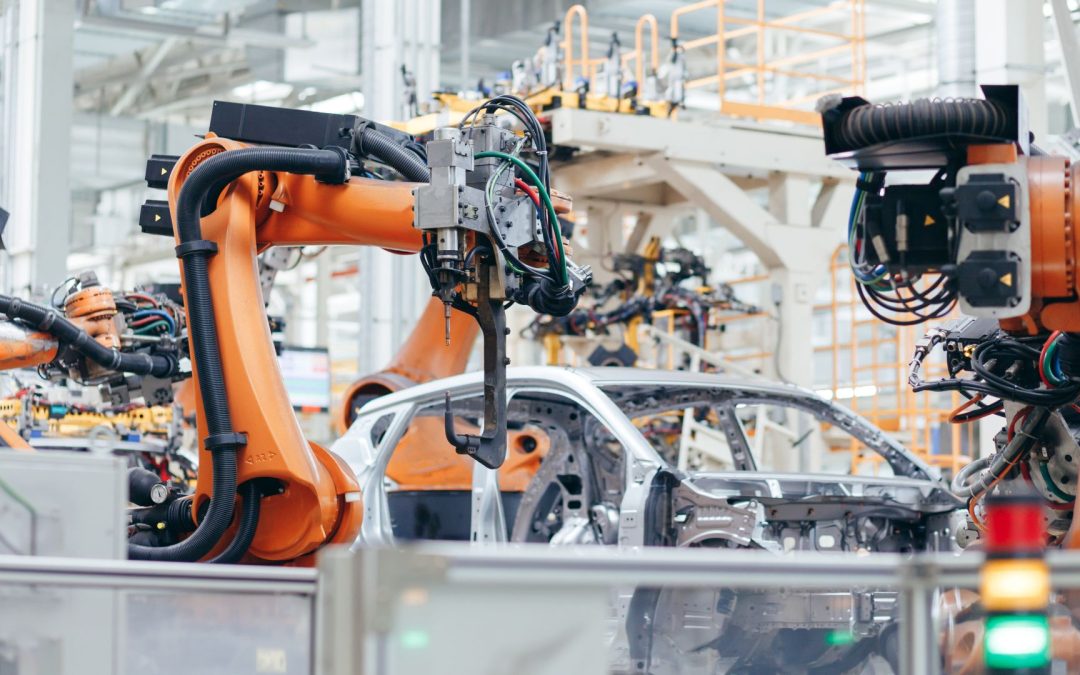
Welding is getting a modern twist. Robotic welding uses machines to do welding work quickly and accurately, taking a lot of the heavy lifting off human hands. It helps factories move faster and keeps the results consistent every time. Even smaller shops are starting to try it out for better efficiency.
In many US industries, automated welding is helping production run smoothly while cutting down on mistakes and material waste. These robots can handle repetitive jobs that would tire a person and can reach places humans cannot. This makes work safer and saves time, which keeps costs lower for manufacturers.
In this blog, you are going to learn about the complete explanation of robotic welding, the working process like Programming And Setup and Welding Execution Process, common use cases where it is used in industries, the different types of robots including Arc, Spot, and Laser Welding Robots, and the main benefits of using automated welding for faster, reliable, and high-quality production. By the end, you will see why so many manufacturers are adding robots to their workflow.
Robotic Welding Explained
Robotic welding systems use programmable industrial robots to join metal parts instead of relying on manual welders. The robot follows pre-set paths to perform precise welds, which helps factories keep work consistent and fast. These machines can work continuously with very little downtime, making them ideal for high-volume production and metal fabrication. They handle repetitive tasks that would tire a human welder and can reach tight spots that are difficult or unsafe for people to access.
While the robot does most of the welding, humans still play an important role in setting up the parts, monitoring the machines, and making sure everything runs safely. By using industrial robots, manufacturers can increase production speed, maintain stronger quality across all welds, and reduce material waste. Because these systems are flexible, they can be programmed for different welding methods and jobs, making them a reliable choice for modern factories that need steady output without constantly adding more labor.
The Working Process Of Robotic Welding
There are mainly two working processes in robotic welding, and it is very important that you understand both of them. To learn how they work, keep reading, as below, you will get a complete explanation of each process.
1. Programming And Setup
In robotic welding, programming is where the robot learns what to do. Engineers plan exact welding paths based on the part design so the robot knows where to move. During robotic welding programming, details like speed, angle, and weld length are set before any production starts. This can be done using a control device, computer software, or by guiding the robot by hand. Once everything is saved, the robot follows the same instructions every time without guessing.
The setup focuses on getting the physical workspace ready for welding automation. Metal parts are locked into place so they do not move during welding. The welding torch and sensors are aligned with the work area, so movements stay accurate. Before live welding begins, the robot often runs through the motion without heat to check spacing. After setup is complete, the robot repeats the same motion cycle after cycle with steady results.
2. Welding Execution Process
During the robotic welding process, the robot begins by moving the welding torch to the exact joint location. Sensors help the robot check distance and alignment before any heat is applied. Once in position, the robot starts welding and follows the planned path at a steady speed. This helps create clean, even welds without sudden movement or gaps. The robot works the same way every time, which keeps results consistent from part to part.
Modern automated welding systems can also make small adjustments while welding is happening. Sensors watch the joint and guide the torch if the metal shifts slightly. After each weld, the robot pulls back and prepares for the next cycle. In many setups, this process is supported by detailed part designs created through CAD services, which help define weld paths and torch movement. Once everything is set, the robot repeats the same pattern again and again with reliable results.
Common Use Cases Of Robotic Welding
Robotic welding is used across many industries in powerful ways. By reading below, you will learn where robots are commonly used and why these welding systems matter today in practice.
- Automotive Manufacturing: Automotive manufacturing relies heavily on robotic welding applications for frames, exhaust systems, and body panels. Robots handle thousands of repeat welds on doors, roofs, and chassis parts every day. This keeps production moving fast while maintaining the same weld quality on every vehicle.
- Aerospace Industry: Aircraft and space equipment require clean and steady welds for safety reasons. Robots are used to join large panels, engine components, and fuel systems with tight tolerances. Their steady movement helps reduce errors in complex metal assemblies.
- Construction Projects: In construction, robots weld steel beams, columns, and prefabricated sections used in buildings and bridges. Mobile robotic systems are also used on pipelines for oil, gas, and water transport. These jobs involve long weld seams that benefit from steady robotic motion.
- Heavy Equipment: Heavy equipment manufacturers use robots to weld thick metal parts on tractors, loaders, and industrial machines. These welds often run long distances and require consistent heat control. Welding automation uses help keep these large components strong and uniform.
- Consumer Products: Consumer product manufacturers apply robotic welding for consistent assembly results. Robots help build appliances, metal furniture, gym equipment, and electronic housings. This keeps parts uniform and supports large production runs without slowing down.
Types Of Robotic Welding
There are several different types of robotic welding used across industries today. By reading below, you will learn about each type, how they work, and where they are commonly used.
1. Arc Welding Robots
Arc welding robots are widely used in manufacturing because they handle a wide range of welding jobs with steady results. They are commonly used for steel and aluminum parts where strong, permanent joints are needed. Robotic arc welding works well on frames, pipes, and large structures that require continuous welds. Since robots move at a fixed speed and angle, the weld quality stays the same from start to finish, even during long production runs.
These robots are ideal for factories that deal with high-volume work and thick materials. They can stay active for most of a shift without slowing down, which helps production stay on schedule. In industries like aerospace manufacturing, arc welding robots are used on structural components that need clean and uniform welds. Because they repeat the same motion every cycle, manufacturers get reliable results without relying on manual consistency.
2. Spot Welding Robots
Robotic spot welding is mostly used in automotive assembly lines where speed and repetitive work matter the most. These robots are designed to join overlapping metal sheets quickly by pressing them together and applying electrical current at set points. A single vehicle body can require thousands of spot welds, and robots can complete this work without slowing down or losing accuracy. Their steady movement helps keep every weld point uniform across the entire structure.
With spot welding automation, robots can easily handle heavy welding guns that are difficult for people to manage for long periods. This makes the process safer and more consistent on busy shop floors. These systems are also widely used to build metal panels for appliances and electronic casings. Because robots repeat the same motion every time, manufacturers can maintain reliable output while keeping material use low and production lines moving smoothly.
3. Laser Welding Robots
Laser welding robots are used when parts need very clean and accurate welds. They work by using a focused light beam to join metal without direct contact. This makes them ideal for thin materials and small components where even slight heat changes can cause problems. Robotic laser welding is often found in electronics and advanced manufacturing, where speed and detail matter more than heavy weld strength.
These robots create smooth welds with very little cleanup afterward, which saves time on finishing work. Because the heat is limited to a small area, parts keep their original shape and size. Laser welding robots are commonly used for items like sensors, battery parts, and medical tools, where consistency is key. Their fast working speed also helps manufacturers produce more units per shift while keeping weld quality the same on every piece.
Benefits Of Using Robotic Welding
Robotic welding offers many real-world advantages for manufacturers of all sizes. Keep reading to understand how robotic systems help improve quality, safety, speed, and daily production without adding pressure on workers.
- Consistent weld quality: Robotic welding produces the same weld pattern every time, which helps maintain uniform results across large production runs and reduces the need for fixing or reworking parts.
- Higher production speed: Robots work continuously at steady speeds, which increases output without sacrificing accuracy and helps manufacturers stay on schedule during high-demand periods.
- Reduced worker strain: Robotic systems handle repetitive and physically demanding welding tasks, lowering physical stress on workers and allowing them to focus on supervision and quality checks.
- Improved workplace safety: By keeping people away from heat, sparks, and fumes, robotic welding creates a safer shop environment and helps reduce welding-related injuries.
- Lower long-term costs: One of the key robotic welding benefits is reduced material waste and labor dependence, which also highlights the long-term automated welding advantages for growing businesses.
Wrapping It Up
Robotic welding has become a strong part of how modern manufacturing works today, especially across the United States, where speed and consistency matter every day. You learned what robotic welding is, how it works through programming and setup, followed by the welding execution process, where it is commonly used across different industries, the main types of systems including arc, spot, and laser welding robots, and the key benefits that come with using automated welding. Robotic welding supports faster production while keeping weld quality steady across large runs, helps reduce physical strain on workers, and allows companies to stay on track with tight schedules. With different robot types available for different jobs, businesses can choose systems that fit their needs, and as automation continues to grow, robotic welding keeps shaping how products are built.
We are X-PRO CAD, and we help businesses, inventors, and product creators turn ideas into real, buildable designs and products with confidence. We offer full-service CAD design, 3D modeling, drafting, engineering, prototyping, and even manufacturing support, all under one roof, so you do not have to juggle multiple vendors. Our team works closely with you from start to finish, bringing precision, creativity, and real-world know-how to every project we take on. Whether you need detailed drawings, product development help, or support preparing parts for production, we are here to make your work easier and more efficient. You can easily get in touch with us by sending us an email at project.inquiries@x-professionals.comor calling (571) 583-3710 to talk about your next project and see how we can help you bring your vision to life.


 SR
SR  EN
EN
Скорашњи коментари