
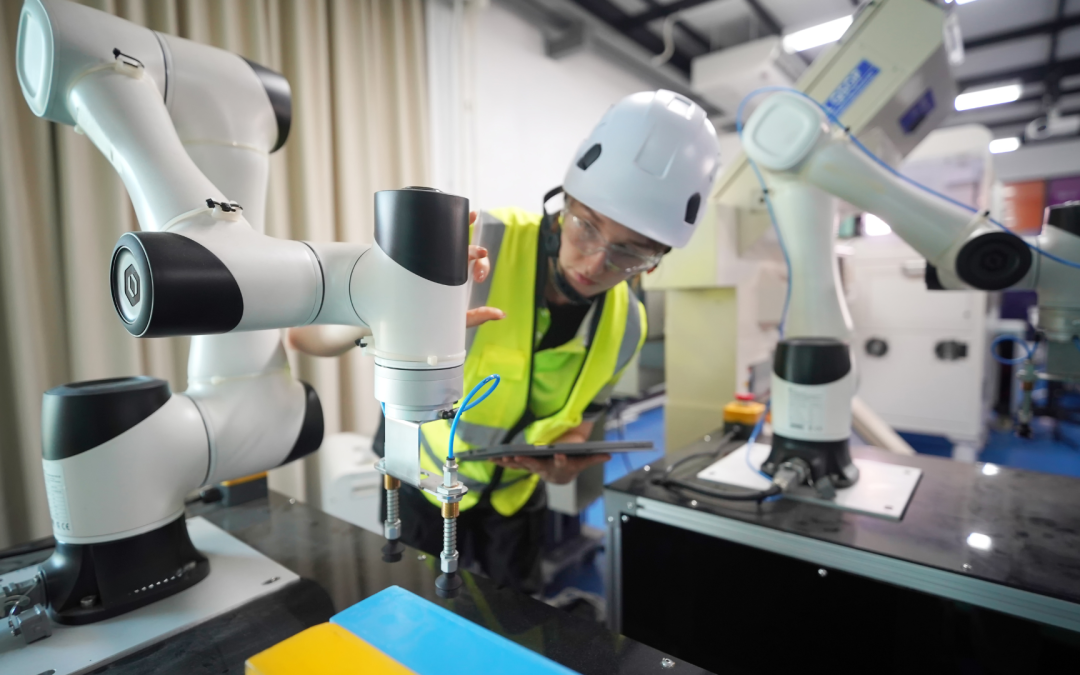
Industry data suggests that 30 to 50 percent of automation projects fail during initial implementation, often because integration planning and system coordination were insufficient.
Robotic integration failures are often blamed on software, controls logic, or robot programming. In reality, most robotic integration failures originate in mechanical design long before controls engineers begin commissioning the system.
Automation teams frequently investigate sensors, code, and motion parameters when robotic performance breaks down. These elements are visible during testing, which makes them the most obvious place to search for problems. But the underlying causes are usually embedded earlier in the engineering process. Tolerance conflicts, unstable mounting structures, misaligned datum systems, and poorly coordinated mechanical interfaces create conditions that robotics and controls cannot correct.
Controls engineers often discover these issues during commissioning, when the robot begins executing real production cycles. At that point, the mechanical architecture of the system is already built and difficult to modify without costly redesign.
Understanding the mechanical root causes of robotic integration problems is essential for developing automation systems that perform reliably in production environments.
Why Robotic Integration Failures Are Often Misdiagnosed
When robotic systems fail to meet performance expectations, the investigation often begins in the wrong place. Most teams initially focus on robot programming, controls logic, sensors, or motion parameters. These elements are visible during commissioning and testing, which makes them the most obvious targets for troubleshooting.
However, many robotic integration problems are already embedded in the mechanical architecture of the system. By the time automation engineers begin commissioning the equipment, the underlying design decisions have already been finalized.
This timing gap is one of the main reasons robotic integration failures are frequently misdiagnosed.
Failures Become Visible During Commissioning
Robotic systems typically reveal problems during the final stages of deployment, when motion sequences and production cycles are first executed.
At this point, controls engineers are responsible for bringing the system online. When issues appear, they are naturally attributed to the controls layer.
Common symptoms that emerge during commissioning include:
• inconsistent pick-and-place accuracy
• unstable cycle times
• unexpected collision paths
• sensor misreads or positioning drift
• parts failing to align with fixtures
While these symptoms appear during controls testing, the root causes often lie within the mechanical structure of the system.
Mechanical Decisions Are Locked in Early
The most important design decisions affecting robotic system integration are made months before commissioning begins.
During the early engineering stages, teams define:
• mechanical layouts and structural frames
• mounting interfaces for robotic bases
• datum strategies and reference surfaces
• fixture geometry and part presentation
• clearances for cables, tooling, and sensors
Once hardware fabrication begins, these elements become difficult or impossible to modify without significant redesign.
If mechanical alignment, tolerance control, or structural rigidity were not engineered correctly, the automation system inherits those weaknesses.
Controls Cannot Compensate for Structural Instability
Another reason automation integration issues are frequently misdiagnosed is the assumption that software can correct most physical problems.
Controls engineers can compensate for small variations through calibration, offsets, and motion adjustments. However, software has limits.
Controls cannot correct:
• structural flex or frame deflection
• inconsistent mechanical reference points
• tolerance stack-ups across multiple assemblies
• unstable fixtures or misaligned mounting surfaces
When these conditions exist, robotic systems may still operate, but performance becomes unpredictable and repeatability degrades over time.
Robotics Is Often Treated as a Software Problem
Many organizations approach robotics as primarily a programming challenge. Robotics teams often focus on motion planning, vision systems, and control algorithms because those areas are highly visible during implementation.
In reality, successful robotic system integration depends on stable mechanical infrastructure.
Robots assume that the environment around them is mechanically consistent. When the surrounding structure is unstable or poorly aligned, even perfectly written control software cannot maintain reliable operation.
Understanding this distinction is critical for diagnosing robotic integration failures and preventing costly automation setbacks.

The Mechanical Foundations of Robotic System Integration
Successful automation does not begin with programming. It begins with mechanical stability. Before a robot executes a single motion command, the surrounding system must provide a predictable physical environment. This is the foundation of reliable robotic system integration.
Industrial robots are extremely precise machines. Many modern robotic arms can repeat movements within fractions of a millimeter. However, that precision assumes that the mechanical structures supporting the robot are equally stable. If the mechanical environment shifts, flexes, or drifts, the robot will repeat the same motion but the physical result will be different every time.
This is why robotics mechanical design plays a critical role in automation performance. Robots rely on consistent geometry, stable reference points, and rigid structures. When those conditions are not engineered correctly, even advanced control systems cannot maintain accuracy.
Structural Rigidity and Frame Stability
Every robotic system depends on the stability of the structures that support it. This includes the robot base, surrounding frames, fixtures, and mounting surfaces.
If these elements lack rigidity, even small movements can affect positioning accuracy. Robotic motion generates forces during acceleration, deceleration, and tool engagement. Over time, flexible frames or poorly supported structures can introduce vibration or deflection.
Common consequences include:
• inconsistent positioning during high-speed cycles
• tool path drift during repetitive operations
• vibration that reduces accuracy and repeatability
A robot can only be as stable as the structure it is mounted to.
Mounting Interface Precision
The interface between the robot and its mounting surface is another critical mechanical factor. Small alignment errors at the mounting interface can propagate throughout the system.
For example, a slight angular misalignment in the base plate can shift the robot’s working envelope. This misalignment can cause robotic paths to deviate from their intended positions relative to fixtures, conveyors, or assembly stations.
Key mounting considerations include:
• flatness of the mounting surface
• precision of bolt patterns and locating features
• rigidity of the mounting plate or pedestal
• alignment between the robot base and surrounding equipment
If the mounting interface is not engineered precisely, robotic programs may require constant adjustment.
Datum Strategy and Reference Surfaces
Robotic systems rely on coordinate systems that must align with the physical environment. These coordinate systems are anchored to mechanical reference points known as datums.
When datum strategies are poorly defined, robotic positioning becomes inconsistent.
For example:
• fixtures may reference a different datum than the robot base
• sensors may detect parts relative to a separate coordinate system
• part presentation may shift relative to robotic tooling
These inconsistencies create alignment errors that accumulate during robotic system integration.
A strong datum strategy ensures that all components of the system reference the same physical geometry.
Kinematic Constraints and Alignment
Robotic systems operate within defined kinematic limits. Tooling, fixtures, and surrounding equipment must be positioned so that robotic motion paths remain consistent and collision-free.
Mechanical misalignment can introduce unexpected constraints. These may include:
• robotic joints approaching singularities
• restricted access to parts or tools
• collisions with surrounding structures
• inefficient motion paths that reduce cycle time
Proper robotics mechanical design ensures that robotic motion remains predictable across the full operating envelope.
Why Mechanical Stability Determines Robotic Accuracy
Robotic control systems assume that the mechanical world around them is stable. When the robot repeats a motion command, it expects the surrounding geometry to remain constant.
When mechanical systems drift, however, that assumption breaks down.
The robot may repeat its programmed motion perfectly, but the physical outcome changes because the mechanical environment has shifted.
This is why many automation challenges are not software problems. They are mechanical integration problems.
Key Mechanical Factors in Robotic Integration
| Mechanical Factor | Why It Matters | Common Failure Symptoms |
|---|---|---|
| Structural rigidity | Prevents vibration and frame deflection during robotic motion | Inconsistent positioning, unstable cycle times |
| Mounting interface precision | Ensures accurate alignment between robot and surrounding equipment | Tool path misalignment, repeated calibration |
| Datum strategy | Aligns coordinate systems across robots, fixtures, and sensors | Pick-and-place errors, fixture misalignment |
| Kinematic alignment | Maintains predictable motion paths and working envelopes | Collision risks, inefficient robot movements |
| Environmental stability | Reduces drift caused by thermal expansion or structural movement | Gradual positioning errors during production |
Common Mechanical Causes of Robotic Integration Failures
Many robotic integration failures originate from mechanical issues that develop long before commissioning begins. While these problems may appear during robot programming or system testing, the underlying causes are typically embedded in the physical design of the automation system.
Robots execute motion commands with high repeatability, but they rely on a stable mechanical environment to maintain accuracy. When structural alignment, tolerance control, and reference geometry are not engineered correctly, the robot simply repeats inaccurate movements. Controls software may temporarily compensate for these conditions, but the underlying mechanical instability remains.
Understanding the most common mechanical failure points helps engineering teams diagnose robotic integration problems more effectively and avoid costly redesigns during commissioning.
Tolerance Stack-Ups Across Robotic Assemblies
One of the most common causes of robotic integration failures is cumulative dimensional variation across multiple components. This phenomenon, known as a tolerance stack-up, occurs when small variations from individual parts combine to produce significant alignment errors across the entire system.
In robotic automation systems, multiple mechanical elements interact simultaneously. These may include structural frames, robotic mounting plates, fixtures, conveyors, and part presentation systems. Each of these elements carries its own dimensional tolerances.
When these tolerances accumulate, they can shift the position of parts relative to the robot’s programmed motion path.
Typical tolerance stack-up sources include:
• cumulative dimensional variation across frames, fixtures, and mounting interfaces
• fixture-to-frame tolerance interactions that alter part location
• misalignment between robotic coordinate systems and part positioning
Even small dimensional deviations can create robotic alignment errors when robots operate at high speeds and tight tolerances. A robot may repeat the same motion path precisely, but if the part is slightly out of position due to accumulated tolerance variation, the operation will fail.
This is why tolerance stack up robotics analysis is an essential part of automation engineering. Without careful tolerance planning, robotic systems may require constant recalibration or manual adjustment to maintain performance.
Weak Structural Rigidity and Vibration
Another common mechanical cause of robotic integration problems is insufficient structural rigidity. Robotic systems generate dynamic loads during acceleration, deceleration, and tool engagement. If supporting structures are not rigid enough to absorb these forces, small movements can occur throughout the system.
These structural movements may appear insignificant at first. However, when robots repeat high-speed cycles thousands of times per hour, even minor deflection can affect positioning accuracy.
Common sources of structural instability include:
• flexible or undersized structural frames
• robotic base deflection caused by insufficient mounting stiffness
• vibration introduced by repeated motion cycles
Over time, these movements can produce inconsistent robotic positioning and reduced repeatability. Parts may appear correctly aligned during initial testing but drift slightly during sustained operation.
Because robots execute identical motion commands each cycle, structural vibration or flex introduces variability that the control system cannot eliminate.
Misaligned Datum and Reference Systems
Robotic systems depend on clearly defined reference geometry. These reference points, known as datums, establish the coordinate relationships between robots, fixtures, sensors, and parts.
When datum strategies are poorly defined or inconsistently implemented, alignment errors propagate across the system.
For example, the robot base may reference one coordinate system, while fixtures and conveyors reference another. If these coordinate systems are not properly aligned, the robot’s programmed path will not match the actual position of the parts.
Common causes of datum misalignment include:
• poor coordinate alignment between robot, fixtures, and parts
• inconsistent or unstable reference surfaces
• calibration instability caused by shifting reference geometry
These issues frequently lead to robotic pick-and-place errors. A robot may attempt to grip a part in a position that is slightly offset from the actual location of the component. Over time, these small discrepancies accumulate and disrupt automation performance.
Cable Routing and Clearance Conflicts
Cable routing is another mechanical factor that can affect robotic system reliability. During the design phase, cable paths may appear acceptable within CAD models or layout drawings. However, real-world installation conditions often reveal constraints that were not fully considered.
Cables must move with robotic arms, tooling, and sensors without interfering with surrounding equipment. Poor routing can introduce unexpected mechanical resistance or interference during operation.
Common routing challenges include:
• interference between cables and moving robotic components
• limited access for sensors, tools, or maintenance personnel
• routing constraints discovered only during installation
When these issues arise during commissioning, engineers may need to reroute cables, reposition sensors, or modify mechanical components. These adjustments can delay system startup and introduce new integration complications.
Thermal Expansion and Environmental Effects
Robotic systems also operate within real-world environmental conditions that influence mechanical stability. Temperature fluctuations can cause structural components to expand or contract, particularly across long frames or large robotic work cells.
In precision automation environments, even small dimensional changes can affect robotic positioning accuracy.
Important environmental factors include:
• temperature-driven dimensional drift across structural components
• expansion across long robotic structures or conveyor systems
• variation in ambient conditions between commissioning and production
If environmental conditions are not considered during engineering, robotic systems may perform correctly during initial testing but experience gradual alignment drift once production begins.
Why Controls Engineers Cannot Fix Mechanical Problems
When robotic systems begin to behave unpredictably, the first response is often to adjust software, motion parameters, or sensor calibration. Controls engineers are responsible for bringing the system online, so troubleshooting typically starts with the controls layer. While these adjustments can address small variations, they cannot correct deeper mechanical issues.
This is a common misunderstanding in robotics projects. Controls engineers can compensate for minor deviations, but they cannot stabilize an automation system that is mechanically unstable. When structural alignment, tolerance control, or reference geometry is flawed, software adjustments only mask the problem temporarily.
Robotic systems operate within defined mechanical limits. Controls software assumes that the robot base, fixtures, and surrounding structures remain stable relative to the coordinate system used during programming. When that stability is compromised, the robot continues to repeat its programmed motions, but the physical results begin to drift.
The Limits of Software Compensation
Controls systems are designed to correct small deviations between expected and actual positioning. Through calibration, offsets, and sensor feedback, the system can adjust robotic motion within a limited range.
However, these adjustments depend on a mechanically stable environment. If the underlying structure moves or flexes, software corrections quickly reach their limits.
Controls engineers can compensate for:
• small dimensional variations in part presentation
• minor fixture positioning differences
• limited sensor calibration adjustments
Controls engineers cannot compensate for:
• structural instability in frames or mounting systems
• tolerance stack-ups that shift part geometry
• misaligned mechanical reference systems
When these conditions exist, the robot executes its program correctly, but the environment around the robot has changed.
Calibration Works Only Within Mechanical Limits
Calibration routines are often used to align robotic coordinate systems with the physical environment. These routines help synchronize robot positioning with fixtures, conveyors, and tooling.
Calibration assumes that the mechanical structure remains stable after alignment. If the structure moves, the calibration quickly becomes invalid.
Common signs that calibration is compensating for mechanical problems include:
• repeated calibration cycles during commissioning
• gradual drift in robotic positioning after calibration
• inconsistent accuracy between production runs
When calibration must be performed frequently, it usually indicates that the mechanical foundation of the system is unstable.
Software Corrections Can Reduce System Performance
Another risk of relying on controls adjustments to correct mechanical problems is reduced system efficiency. As engineers attempt to stabilize an unstable mechanical system, they often introduce additional software layers.
These adjustments may include:
• motion offsets to correct positioning drift
• slower motion profiles to reduce vibration
• repeated sensor verification steps during operation
While these measures may allow the system to function temporarily, they introduce new challenges.
Automation performance may suffer due to:
• increased cycle times
• reduced throughput
• more complex control logic
• higher maintenance requirements
In many cases, these software workarounds increase system complexity without addressing the underlying mechanical cause.
Recognizing Mechanical Problems During Commissioning
Many automation integration issues become visible during commissioning when robots begin executing real production tasks. Controls engineers often observe symptoms that appear to be programming issues but are actually mechanical in origin.
Typical warning signs include:
• unstable pick-and-place accuracy
• drifting coordinate systems during operation
• robotic paths that require repeated adjustment
• parts that occasionally miss fixtures or tooling
These symptoms often indicate that the mechanical environment is not stable enough for the robot to maintain consistent positioning.
When these issues appear, the most effective solution is often mechanical correction rather than further software adjustments.
Mechanical vs Controls Root Causes in Robotic Systems
| Issue Observed During Commissioning | Common Initial Diagnosis | Actual Root Cause |
|---|---|---|
| Inconsistent pick-and-place accuracy | Robot programming error | Tolerance stack-up or fixture misalignment |
| Robotic paths drifting over time | Calibration problem | Structural movement or frame deflection |
| Frequent recalibration required | Sensor instability | Unstable mechanical reference points |
| Reduced cycle speed needed for stability | Motion tuning issue | Structural vibration or weak frame rigidity |
| Intermittent part positioning errors | Vision or sensor problem | Misaligned fixtures or datum systems |
Engineering for Successful Robotic Integration
Preventing robotic integration failures requires a shift in mindset. Instead of treating automation challenges as programming problems discovered during commissioning, engineering teams must address them during system design. Successful robotic system integration begins with disciplined engineering decisions that ensure the mechanical environment is stable, predictable, and aligned with the robot’s operating requirements.
A core principle of design for robotics is that automation constraints must be considered from the beginning of the product and equipment development process. Robots operate with high precision, but they depend on consistent geometry, rigid structures, and coordinated system design.
Key practices that support reliable automation engineering design include:
• Designing products and assemblies with automation requirements in mind
• Validating tolerance stack-ups during engineering, not after fabrication
• Aligning mechanical and electrical systems early in the development process
• Modeling assembly conditions and robotic reach envelopes before hardware is built
• Ensuring structural rigidity and clearly defined datum strategies
When these principles are applied during engineering, robotic systems operate predictably once commissioning begins. Automation success is rarely determined on the production floor. It is determined during design, when the mechanical foundations of the system are established.
How Engineering Partners Reduce Robotic Integration Risk
Robotic integration challenges often emerge when multiple engineering disciplines evolve separately. Mechanical design, electrical architecture, tooling design, and manufacturing planning may be developed by different teams or vendors. When these elements are not coordinated early, integration risks accumulate and only become visible during commissioning.
External engineering partners can help reduce this risk by providing a structured, system-level perspective during development. Instead of focusing on isolated components, experienced engineering teams evaluate how the entire system will function once robotics, fixtures, sensors, and production equipment are operating together.
Early engineering validation typically focuses on several critical areas.
Production-ready CAD development
Automation systems depend on precise digital models that accurately represent how equipment will be manufactured and assembled. Production-ready CAD models allow engineering teams to evaluate mechanical alignment, structural stability, and component interfaces before fabrication begins.
Key advantages include:
• clearer visibility into mechanical integration points
• early detection of clearance conflicts and interference
• accurate modeling of robotic reach and motion paths
Mechanical and electrical coordination
Robotic systems combine mechanical structures, electrical components, sensors, and control hardware. When these disciplines are developed independently, integration conflicts can appear late in the process.
Engineering coordination helps ensure that:
• cable routing and sensor placement are compatible with robotic motion
• electrical components fit within mechanical structures
• control hardware aligns with system geometry and access requirements
Tolerance analysis
Tolerance analysis plays a critical role in preventing robotic alignment errors. By evaluating how dimensional variation accumulates across assemblies, engineers can predict where positioning errors may occur.
Early tolerance analysis helps teams:
• identify potential robotic alignment issues
• refine fixture and mounting strategies
• ensure consistent part positioning during automation cycles
Prototyping and manufacturing validation
Even well-designed systems benefit from validation before full-scale production. Prototyping and manufacturing evaluation help confirm that engineering assumptions hold true in real-world conditions.
Validation activities often include:
• testing assembly sequences and fixture interactions
• verifying robotic reach and access during operation
• identifying mechanical adjustments before final production builds
By introducing engineering oversight earlier in the development process, external partners can help identify integration risks before hardware is built. This approach reduces costly redesign, shortens commissioning timelines, and improves the long-term stability of robotic automation systems.
Conclusion: Robotic Integration Success Begins in Mechanical Design
Robotic integration failures rarely originate in controls or software. In most cases, they emerge from mechanical decisions made much earlier during engineering.
Robotic systems execute motion with high precision, but they depend on a stable mechanical environment to maintain that precision. When structural alignment, tolerance planning, and reference geometry are not engineered correctly, the robot simply repeats inaccurate movements. Software adjustments may temporarily compensate for these issues, but they cannot correct mechanical instability.
Automation systems depend on several fundamental engineering conditions:
• stable geometry across structures, fixtures, and robotic mounting interfaces
• precise tolerance management throughout assemblies
• coordinated development between mechanical, electrical, and manufacturing teams
Organizations that approach robotics as a mechanical and systems engineering discipline avoid many of the integration failures that appear during commissioning. By validating mechanical stability and system alignment early, they protect performance, reduce integration delays, and ensure that automation scales reliably in production.
At X-PRO, we support robotics developers, product teams, and manufacturers that require production-ready engineering before automation systems reach the factory floor. Our work spans CAD development, mechanical engineering, tolerance validation, prototyping, and manufacturing execution. The goal is to identify integration risks early and build automation systems on stable mechanical foundations.
If you are developing a robotic system or preparing an automation platform for production, contact our engineering team to discuss your project requirements.
FAQ: Robotic Integration Failures and Mechanical Design
What causes robotic integration failures?
Robotic integration failures are most often caused by mechanical design issues rather than software or controls errors. Common causes include tolerance stack-ups across assemblies, misaligned fixtures, weak structural frames, inconsistent datum strategies, and poor coordination between mechanical and electrical systems. When these issues exist, robots repeat programmed motions accurately but interact with an unstable mechanical environment, leading to positioning errors and unreliable automation performance.
Why do robotic systems fail during commissioning?
Robotic systems frequently fail during commissioning because this is the first time the automation system operates under real production conditions. At this stage, the robot begins executing full motion cycles, interacting with fixtures, sensors, and parts. Mechanical integration problems such as misalignment, structural vibration, or inaccurate part positioning become visible only when the system runs at operational speeds.
Can controls software fix mechanical robotics problems?
Controls software can compensate for small positioning variations through calibration and motion adjustments, but it cannot correct mechanical instability. Issues such as structural deflection, tolerance stack-ups, or misaligned mounting interfaces require mechanical correction. When software is used to compensate for mechanical problems, systems often experience reduced accuracy, increased complexity, and lower cycle efficiency.
What role do tolerance stack-ups play in robotic automation?
Tolerance stack-ups occur when small dimensional variations from multiple components combine to create larger positioning errors across an assembly. In robotic automation, these cumulative variations can shift part locations relative to the robot’s programmed motion path. This leads to robotic alignment errors, missed picks, or inconsistent assembly operations. Proper tolerance analysis during engineering helps ensure predictable robotic positioning.
How can engineers prevent robotic integration problems?
Engineers can reduce robotic integration risk by designing automation systems with mechanical stability and alignment in mind from the beginning. Effective practices include validating tolerance stack-ups during engineering, defining consistent datum strategies, ensuring structural rigidity, coordinating mechanical and electrical system design early, and modeling robotic reach and assembly interactions before fabrication. This approach supports reliable robotic system integration and reduces costly redesign during commissioning.









Скорашњи коментари