
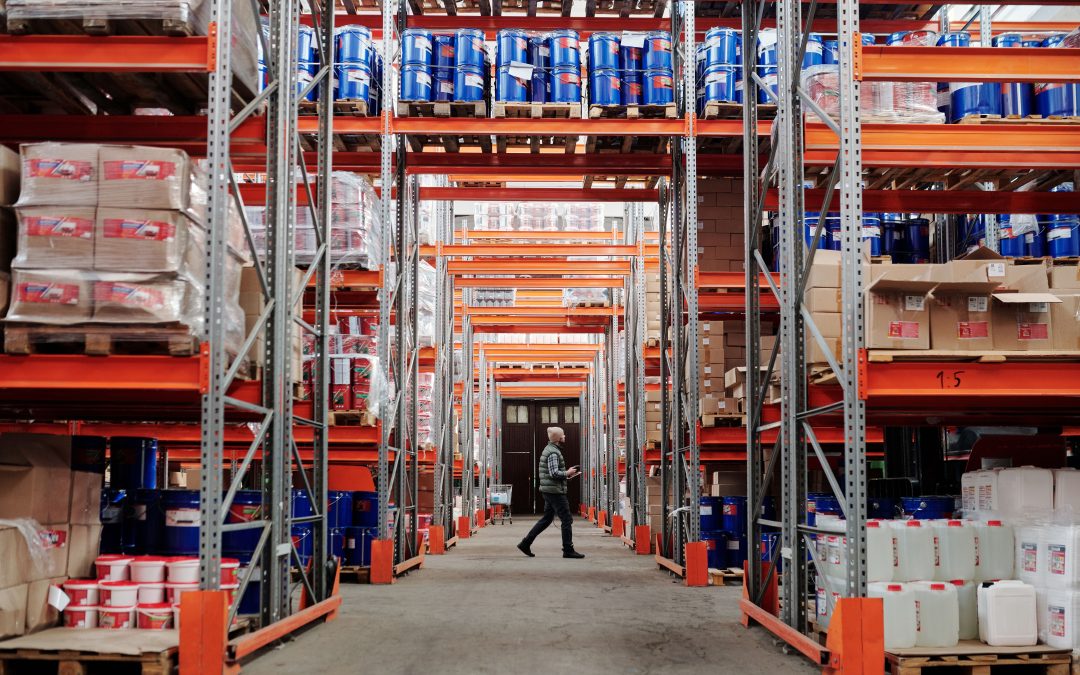
A product is not truly market-ready when manufacturing ends. It still has to be received, identified, stored, prepared, packed and delivered. When these requirements are considered only after production, businesses can discover avoidable packaging changes, labeling problems, storage inefficiencies or receiving delays at exactly the wrong time.
That is why X-PRO and MetsCube have established a referral and marketing partnership that connects two parts of the product journey that are often managed separately. X-PRO supports product development, CAD, engineering, prototyping, tooling and manufacturing. MetsCube supports e-commerce preparation, storage, Amazon FBA preparation, distribution and order fulfillment.
The companies remain independent, but the relationship creates a clearer bridge from the engineering table to the warehouse floor—and ultimately to the customer.
Why fulfillment planning before manufacturing matters
Engineering teams naturally focus on function, fit, materials, tolerances, manufacturability and production cost. Fulfillment teams examine another set of practical constraints: receiving, storage density, labeling, packaging, kitting, handling, marketplace requirements and outbound shipping.
Those considerations may appear later in the product journey, but they can influence decisions made much earlier. When fulfillment requirements are visible before tooling, packaging and production specifications are finalized, teams have more flexibility to address them without creating expensive rework.
1. Fulfillment requirements can influence product and packaging decisions
A small geometry change may allow a more efficient retail package or shipping carton. Packaging may need a clearly defined label area. A multi-part product may be easier to receive and fulfill when kitting instructions, part identification and packaging quantities are established before a large production run.
These requirements should not control the engineering process, but they should be understood before expensive decisions become difficult to change.
Key principle: Fulfillment should not dictate engineering, but fulfillment knowledge should inform engineering before tooling, packaging and production specifications are locked.
2. Early collaboration reduces handoff risk
Most product launches involve multiple handoffs:
- design to prototype;
- prototype to tooling;
- tooling to production;
- production to freight;
- freight to warehouse; and
- warehouse to customer.
Every transition creates an opportunity for missing information or mismatched expectations. Connecting manufacturing and fulfillment teams earlier helps clarify how finished goods will be packed for inbound shipment, what information belongs on cartons and individual units, whether inspection or kitting will be required, how SKUs and variants will be identified, and what the warehouse needs before inventory arrives.
3. Manufacturing should be planned with the next operation in mind
Design for manufacturing asks how a product or component will be made reliably and efficiently. The same logic can extend one step further: how will finished inventory be handled once it leaves production?
If a product is difficult to stack, easy to damage, confusing to identify or unnecessarily expensive to package, that problem can repeat across every unit produced. A short fulfillment review before packaging and production specifications are finalized can reveal recurring operational costs before they scale.
4. A stronger fulfillment handoff can support faster launches
Production completion is an important milestone, but finished goods still need to become sellable inventory. Receiving documentation, carton counts, inspections, labeling, storage locations, marketplace preparation and order-routing details all affect how quickly products are ready to ship.
When the fulfillment partner knows what is arriving before the truck reaches the warehouse, the team can prepare instead of react. This is especially useful for businesses moving from a prototype or pilot run into their first meaningful production volume.
5. Fulfillment planning becomes more important as volume grows
Processes that work for 25 units may become inefficient at 2,500 units. Manual labeling, ad hoc storage, oversized packaging and unclear product identification may be manageable during a pilot launch but costly at scale.
Early planning supports more repeatable receiving, inventory organization, Amazon FBA preparation, direct-to-consumer fulfillment and the introduction of future product variants.
6. The customer experiences the entire system
Customers do not separate engineering, manufacturing and logistics. A well-engineered product that arrives damaged, mislabeled or late still creates a poor experience. A fulfillment operation also cannot fully compensate for a product or package that was never designed for real-world handling.
The shared objective is simple: build a product that works, can be manufactured reliably, can be handled efficiently and reaches the customer in the condition intended.
What the X-PRO and MetsCube partnership adds
The new relationship gives customers a more connected path through product development and post-production operations:
- X-PRO supports product design, CAD, mechanical engineering, reverse engineering, prototyping, tooling and manufacturing support.
- MetsCube supports receiving, e-commerce preparation, storage, Amazon FBA preparation, distribution and fulfillment.
- MetsCube can refer customers who need product development, tooling or manufacturing support to X-PRO.
- X-PRO can refer customers who need fulfillment, storage or marketplace preparation to MetsCube.
- X-PRO referrals receive priority quoting from MetsCube.
- The teams can communicate when a project crosses the boundary between production and fulfillment.
This is not a merger or a single combined company. X-PRO and MetsCube remain independent specialists. The value is better communication at a point in the product journey where information is often lost.
When should a fulfillment partner be involved?
A fulfillment partner should ideally be consulted before:
- final retail and shipping packaging is released;
- carton specifications and label locations are locked;
- the first large manufacturing purchase order is placed;
- an Amazon FBA or marketplace launch is scheduled;
- SKUs, variants and kitting requirements are finalized; or
- inventory ships without a receiving, preparation or storage plan.
Not every product requires a detailed third-party logistics review during engineering. However, even a short early conversation can reveal whether downstream requirements deserve attention before production begins.
A practical product-development example
Consider a consumer product that has completed functional prototyping and is moving toward tooling. X-PRO is finalizing enclosure geometry, manufacturing drawings, material selections and production requirements. At the same time, MetsCube reviews expected unit dimensions, master-carton quantities, label locations, storage approach and marketplace preparation needs.
If the fulfillment review identifies a carton, labeling or kitting issue, the teams can address it while packaging and manufacturing details are still flexible. The result is a cleaner transition from production to receiving and a lower chance of paying to correct the same issue across hundreds or thousands of units.
Frequently asked questions
When should a fulfillment partner be involved in product development?
Ideally, a fulfillment partner should be involved before final packaging, labeling, carton specifications and the first large production shipment are locked—especially when the product will use a 3PL, Amazon FBA preparation or marketplace fulfillment.
Can fulfillment requirements affect product design?
Yes. Product dimensions, packaging, label areas, kitting, handling and storage requirements can introduce downstream costs or constraints. These issues are often easier and less expensive to address before production.
What does the X-PRO and MetsCube partnership cover?
X-PRO supports product design, CAD, engineering, prototyping, tooling and manufacturing, while MetsCube supports e-commerce preparation, storage, Amazon FBA preparation, distribution and fulfillment. The companies refer relevant opportunities to each other and can coordinate when a project moves from production into fulfillment.
Are X-PRO and MetsCube now one company?
No. X-PRO and MetsCube remain independent companies collaborating through a referral and marketing partnership.
Building a product that needs a clear path from production to delivery?
Bring engineering, manufacturing and fulfillment requirements into the conversation before the first large production run.














Recent Comments