
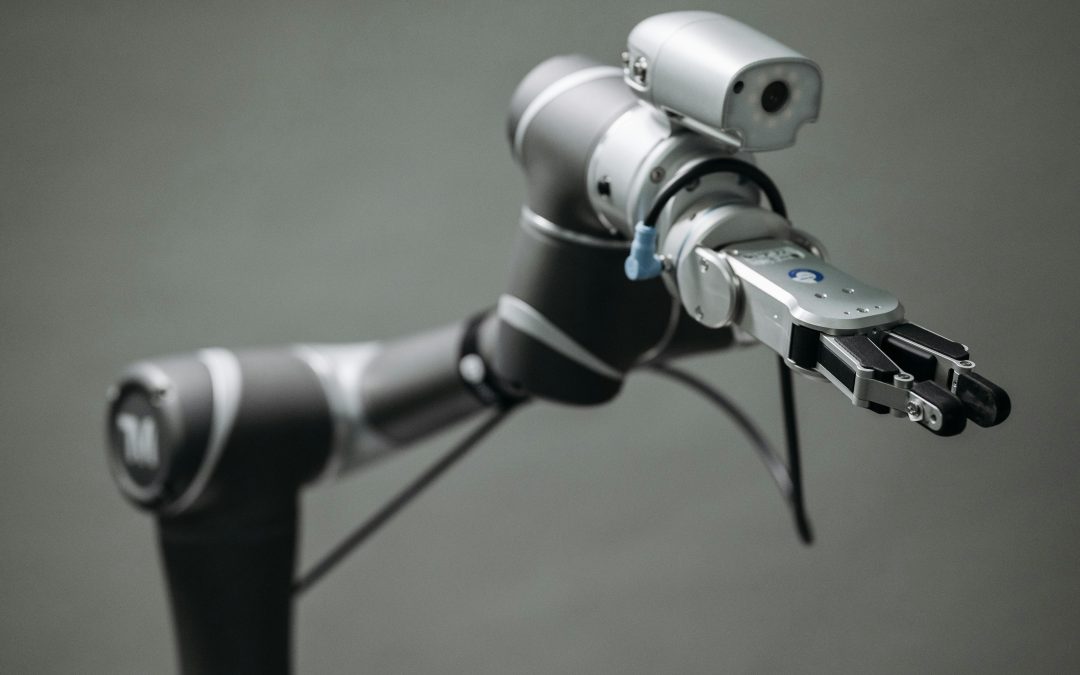
According to research on robotics system performance, approximately 80 % of downtime in robot cells is caused by issues unrelated to the robot itself—including integration, tooling, calibration, and system setup challenges—underscoring how execution and engineering detail determine real-world performance.
Robotics product development is often framed as innovation. In reality, it is an execution discipline. Robotic systems succeed or fail based on engineering precision, not concept alone.
Mechanical integration defines long-term reliability. Multi-axis assemblies, actuator alignment, structural rigidity, and tolerance control determine whether a system performs consistently under load. Small dimensional errors compound quickly in moving systems, leading to vibration, wear, and premature failure.
Early CAD decisions shape production outcomes. Geometry that ignores machining constraints, assembly logic, or manufacturability increases cost and introduces rework. When manufacturing realities are addressed late, redesign becomes inevitable.
Manufacturing constraints must be embedded from the first model. Robotics product development is not just about making a system function. It is about ensuring that it can be produced, assembled, and scaled with predictable performance.ct development succeeds when engineering decisions anticipate manufacturing realities rather than reacting to them later.
What Robotics Product Development Actually Involves
Robotics product development is not a single engineering task. It is a coordinated effort across mechanical design, electrical integration, motion control, and manufacturing planning. Each decision affects system stability, performance, and scalability.
System Architecture and Mechanical Structure
The mechanical foundation determines whether a robotic system performs consistently under real operating conditions.
Key considerations include:
- Structural load paths and rigidity
Frames and supports must distribute loads predictably. Weak structural design introduces deflection, misalignment, and accuracy loss. - Dynamic forces and vibration control
Acceleration, deceleration, and repetitive motion generate dynamic stresses. Poor damping or stiffness compromises repeatability and lifespan. - Mounting geometry and frame stability
Improper mounting surfaces or unstable bases amplify vibration and reduce precision in multi-axis systems. - Material selection aligned with application demands
Weight, strength, fatigue resistance, and environmental exposure must match the robot’s intended operating environment.
Actuators, Drives, and Motion Control Integration
Motion performance depends on precise mechanical and geometric coordination.
Critical factors include:
- Servo and motor alignment precision
Misalignment increases bearing load and reduces efficiency. - Gear reduction packaging and backlash control
Gear tolerances and housing rigidity affect positional accuracy. - Thermal management within confined assemblies
Motors and drives generate heat that must be dissipated to prevent performance degradation. - Tolerance interactions across moving components
Small dimensional variations accumulate across shafts, couplings, and bearings, impacting motion accuracy.

Electrical and Mechanical Coordination
Robotics systems require disciplined coordination between mechanical and electrical domains.
Execution-level considerations include:
- Cable routing through articulated joints
Improper routing causes premature wear or motion restriction. - Connector accessibility and protection
Serviceability and environmental protection must be engineered, not improvised. - Control enclosure space planning
Electrical components require adequate spacing, ventilation, and mounting logic. - EMI and grounding considerations
Electrical interference can affect sensor accuracy and system stability.
Safety and Compliance Constraints
Robotics development must account for operational risk and regulatory requirements from the outset.
This includes:
- Mechanical guarding and fail-safe design
Physical safeguards and redundant systems reduce injury risk. - Risk mitigation for industrial environments
Load handling, emergency stops, and environmental exposure require engineered solutions. - Regulatory considerations for medical and specialized robotics
Tighter documentation, material controls, and validation protocols may apply depending on industry.
Robotics product development is therefore a multidisciplinary engineering discipline. Structural mechanics, motion control, electrical coordination, and compliance requirements must be integrated from the first CAD model through prototype validation and production planning. When these domains are treated as interconnected rather than sequential, system reliability and manufacturability improve significantly.
| Area | Execution-Level Consideration | Why It Matters |
|---|
| Cable Routing | Routing through articulated joints must be planned and strain-relieved | Prevents premature wear, signal failure, and motion restriction |
| Connector Design | Connectors must be accessible, protected, and serviceable | Reduces downtime and simplifies maintenance |
| Control Enclosure Planning | Adequate spacing, ventilation, and mounting structure required | Prevents overheating and electrical instability |
| EMI and Grounding | Proper shielding and grounding strategies must be engineered | Protects sensor accuracy and system reliability |
Where Robotics Projects Fail
Robotics projects rarely fail because the concept is flawed. They fail because execution gaps accumulate across design, integration, and manufacturing. The transition from prototype to production exposes weaknesses that were not engineered out early.
The following failure patterns appear repeatedly in robotics product development.
Tolerance Stack-Up in Multi-Axis Assemblies
Robotic systems rely on coordinated motion across multiple axes. Each interface introduces dimensional variation. When these variations are not controlled systematically, performance degrades.
Common consequences include:
- Cumulative misalignment
Small deviations across shafts, bearings, couplings, and housings compound into measurable positional error. - Bearing stress and premature wear
Misaligned assemblies increase friction and uneven load distribution, reducing component lifespan. - Reduced repeatability and lifespan
Motion systems lose accuracy over time when tolerances are not engineered with stack-up analysis in mind.
In multi-axis robotics, precision is not defined by a single dimension. It is defined by how all dimensions interact.
CAD Models Built Without Manufacturing Context
A robotics design may function perfectly in simulation yet prove costly or unstable in production if manufacturing constraints are ignored.
Typical issues include:
- Geometry incompatible with machining constraints
Deep pockets, inaccessible features, or overly complex internal structures increase cost and reduce feasibility. - Tool access limitations
Designs that do not consider tool reach or fixture requirements create rework during fabrication. - Internal features that increase cost or reduce reliability
Overly intricate geometries may weaken structural integrity or complicate assembly.
When CAD modeling is disconnected from machining, casting, molding, or fabrication realities, redesign cycles become unavoidable.
Prototype Success That Does Not Scale
A working prototype does not guarantee a scalable product. Many robotics systems function because they are manually tuned or adjusted during early builds.
Failure patterns include:
- Manual adjustments during assembly
Hand-fitted components mask tolerance issues that cannot be repeated at scale. - Non-repeatable fits
Lack of tolerance discipline leads to inconsistent assembly outcomes. - Improvised cable management solutions
Temporary routing fixes create long-term reliability risks in production units.
A prototype that requires intervention to function is not production-ready. Scalability requires controlled geometry, documented tolerances, and defined assembly processes.
Fragmented Vendor Coordination
Robotics systems are multidisciplinary by nature. When CAD modeling, engineering, and manufacturing are handled by separate, loosely connected providers, integration risk increases.
Typical breakdowns include:
- Separate CAD, engineering, and machining providers
Each vendor optimizes for its own scope rather than overall system performance. - Communication gaps during revision cycles
Design updates may not fully propagate across stakeholders, introducing inconsistency. - Delays caused by unclear accountability
When performance issues arise, responsibility becomes diffused, slowing resolution.
Fragmentation increases revision cycles, cost escalation, and production delays.
The Underlying Pattern
Most robotics failures are not conceptual failures. They are execution failures.
They emerge from:
- Incomplete tolerance planning
- CAD modeling detached from manufacturing realities
- Prototype validation without scalability planning
- Disconnected engineering and production workflows
Robotics product development demands integration discipline from the first model through final assembly. When execution is treated as secondary, reliability suffers. When execution is engineered deliberately, systems move to production with predictable performance and reduced risk..
Designing Robotics for Manufacturability
Identifying failure patterns is only useful if they are corrected systematically. Robotics product development must shift from reactive redesign to structured engineering discipline. Manufacturability is not an afterthought. It is built into the model from the beginning.
When CAD, mechanical engineering, and production planning are aligned early, robotics systems transition from prototype to scalable manufacturing with fewer delays and lower risk.
Production-Ready CAD Modeling
Production-ready robotics begin with disciplined modeling practices.
Key principles include:
- Parametric modeling discipline
Models must be fully constrained, logically structured, and revision-controlled. Parametric relationships allow controlled iteration without destabilizing the system. - Explicit tolerance definition
Critical dimensions, fits, and interfaces must be defined clearly. Tolerance stack-up analysis should guide bearing placement, shaft alignment, and actuator mounting. - Surface continuity for motion reliability
Mating surfaces, guide rails, and rotating interfaces require controlled geometry to maintain repeatable motion. - Clean assembly hierarchies
Subassemblies must reflect real production logic. Clear structure improves collaboration, documentation, and manufacturing transfer.
Robotics CAD models are not visual representations. They are manufacturing blueprints.
Design for Manufacturing in Robotics
Robotics components must be engineered within the constraints of real fabrication processes.
This requires consideration of:
- CNC machining constraints
Tool reach, fixturing strategy, internal corner radii, and machining time influence geometry decisions. - Casting and molding trade-offs
Draft angles, wall thickness uniformity, and shrinkage behavior must be integrated into early design stages. - Sheet metal and welded frame realities
Bend allowances, weld distortion, and structural reinforcement planning affect final dimensional stability. - Additive manufacturing integration where appropriate
Additive processes can reduce part count or enable complex internal geometries, but must be evaluated for strength, cost, and scalability.
Manufacturability decisions directly affect cost, reliability, and production timelines.
Designing for Assembly and Serviceability
Robotics systems operate in dynamic environments. Maintenance access and modular replacement must be engineered, not improvised.
Critical considerations include:
- Access points for maintenance
Fasteners, connectors, and service components must be reachable without full disassembly. - Modular subsystem architecture
Drive units, control modules, and sensor assemblies should be replaceable as discrete units. - Planned cable and harness routing
Routing must prevent strain, abrasion, and interference across full motion cycles. - Replaceable and standardized components
Standardized fasteners, bearings, and electrical connectors simplify supply chain management and long-term servicing.
Designing for serviceability reduces downtime and increases product lifespan.
Early Prototype Validation
A functional prototype is not the final milestone. Validation must simulate production and operational stress.
Structured validation includes:
- Functional validation under load
Systems should be tested at operating torque, speed, and duty cycles. - Structural stress verification
Frame deflection, joint stress, and dynamic response must be evaluated against expected loads. - Motion accuracy testing
Repeatability, backlash, and positional deviation must be measured under real conditions. - Planned transition from prototype to tooling
Documentation, production drawings, and process alignment must be prepared before scaling.
Early validation reduces downstream rework and protects capital investment.
| Engineering Area | Key Focus | Production Impact |
|---|---|---|
| CAD Modeling | Parametric control and tolerance definition | Reduces redesign and integration errors |
| Motion Systems | Alignment and backlash control | Improves repeatability and lifespan |
| Manufacturing Process Alignment | CNC, casting, molding, and fabrication constraints | Lowers cost and increases scalability |
| Assembly Design | Modular architecture and service access | Reduces downtime and simplifies maintenance |
| Prototype Validation | Load testing and stress verification | Prevents failure during production scale-up |
From CAD to Scalable Manufacturing
Robotics product development only creates value when it transitions from digital model to reliable production. The gap between CAD and manufacturing is where cost overruns, delays, and integration failures typically occur. Closing that gap requires structured coordination between engineering and production from the outset.
Integrated Engineering and Production Planning
Scalable robotics systems are engineered with fabrication in mind.
This means:
- CAD developed alongside machining and fabrication realities
Geometry, tolerances, and assembly logic are aligned with CNC capabilities, fixturing strategy, and material behavior. - Rapid iteration cycles tied to physical validation
Design revisions are tested against real components, not just simulations, reducing uncertainty before scaling. - Reverse engineering where legacy systems are involved
Existing assemblies can be digitized and optimized for manufacturability and integration.
Engineering decisions are validated against production constraints before they become expensive corrections.
Coordinated Offshore Execution with Quality Control
Cost efficiency should not come at the expense of precision. Coordinated execution ensures both.
Key elements include:
- Cost efficiency without compromising tolerances
Offshore-enabled production can reduce cost while maintaining dimensional control. - Controlled documentation and revision management
Clear drawings, version tracking, and defined change processes prevent misalignment between stakeholders. - Reduced handoffs between stakeholders
Fewer disconnected vendors mean fewer interpretation errors and faster problem resolution.
Integrated execution reduces friction across design, engineering, and manufacturing.
Risk Reduction Before Capital Commitment
Robotics manufacturing often requires tooling investment, custom fixtures, and production setup. Risk must be reduced before those commitments are made.
This involves:
- Controlled change management
Design updates are structured and documented to prevent uncontrolled variation. - Assembly validation before tooling
Fit, alignment, and functional testing confirm readiness before scaling. - Production documentation aligned with real processes
Manufacturing instructions reflect actual fabrication and assembly logic.
Predictable execution, not fragmented outsourcing, determines whether robotics systems scale efficiently. When CAD, engineering, and manufacturing are coordinated under a unified framework, transition to production becomes controlled rather than reactive.
Conclusion: Robotics Success Is Determined Before Production Begins
Robotics product development does not fail because systems lack intelligence or capability. It fails when mechanical integration, tolerance control, and manufacturability are not engineered deliberately from the beginning.
Multi-axis assemblies, motion systems, and automated processes execute exactly as designed. They expose misalignment, unmanaged tolerance stack-ups, thermal issues, and fragmented coordination. When robotic systems underperform, the root cause is often embedded upstream in CAD structure, assembly logic, or production planning.
Organizations that scale robotics successfully treat manufacturability as a primary engineering constraint. They define tolerances before committing to tooling. They align actuator geometry with machining capability. They validate assemblies under load before production expansion. They coordinate mechanical and electrical systems early rather than resolving conflicts late.
This approach protects capital investment, stabilizes performance, and reduces revision cycles.
At X-PRO, we support product teams, robotics developers, and manufacturers that require production-ready engineering from concept through scalable manufacturing. Our capabilities span CAD services, mechanical engineering, prototyping, and manufacturing execution. We focus on precision, integration discipline, and controlled transition to production.
If you are developing a robotic system or preparing an existing design for manufacturing, contact us at project.inquiries@x-professionals.com or call +1 (571) 583-3710 to discuss your requirements and define a structured path to execution. execution benefit from a coordinated engineering partner that reduces friction from concept through production.
Frequently Asked Questions
What is robotics product development?
Robotics product development is the structured process of designing, engineering, prototyping, and preparing robotic systems for scalable manufacturing. It includes mechanical architecture, motion system integration, electrical coordination, tolerance control, and production planning. The objective is not only to make a system function, but to ensure it performs reliably under real operating and manufacturing conditions.
Why is manufacturability important in robotics design?
Robotics systems contain multi-axis assemblies, precision motion components, and tightly coordinated electrical systems. If manufacturability is not integrated early, small geometric inconsistencies can compound into misalignment, vibration, and reduced lifespan. Designing for manufacturability reduces rework, protects tooling investment, and improves repeatability in production.
What causes robotics projects to fail during production scaling?
Most failures during scale-up result from execution gaps rather than conceptual flaws. Common causes include unmanaged tolerance stack-ups, CAD models disconnected from machining constraints, non-repeatable prototype assemblies, and fragmented coordination between engineering and manufacturing providers. These issues become visible only when systems move from prototype to production.
How does CAD modeling affect robotic system performance?
CAD modeling defines geometry, tolerances, surface continuity, and assembly logic. Poor modeling discipline can introduce hidden misalignment, inaccessible fasteners, or geometry incompatible with fabrication processes. Production-ready CAD ensures dimensional stability, repeatable assembly, and predictable motion performance before parts are manufactured.
When should manufacturing planning begin in robotics development?
Manufacturing planning should begin at the earliest stages of design. Process constraints, tooling considerations, material selection, and assembly sequencing should inform CAD decisions from the first iteration. Early integration of engineering and production planning reduces risk, shortens timelines, and improves scalability.

Recent Comments